
 Thinker X400
 LCD 3D Printer L10
 Hyper Speed TPU
 Standard TPU 90A Filament
 Standard TPU 95A Filament
 TPU Rainbow-95A
 Ultra Silk PLA
 Standard PLA
 Silk Tri-color PLA
 More
 Standard PETG
 PETG-GF
 PETG-CF
 Hyper Speed PETG
 PA6/12-GF
 Standard ASA
 Hyper Speed ASA
 ASA Glass Fiber
 ASA Carbon Fiber
 ABS Glass Fiber
 ABS Carbon Fiber
 Hpyer Speed ABS Filament
 Water Washable Resin
 Low Odor Resin
 ABS Like Resin


Performance Testing Methods for 3D Printing Material
2026-02-05
I. Core Mechanical Performance Testing: Evaluating Mechanical Strength and Toughness of Materials
Mechanical performance testing is used to measure the performance of polymers under stress (tension, impact, bending, etc.), and is the core basis for judging whether materials are suitable for load-bearing, impact-resistant and other scenarios. The following are three most commonly used mechanical testing methods:
(1) Tensile Test: Measuring Tensile Capacity and Ductility of Materials
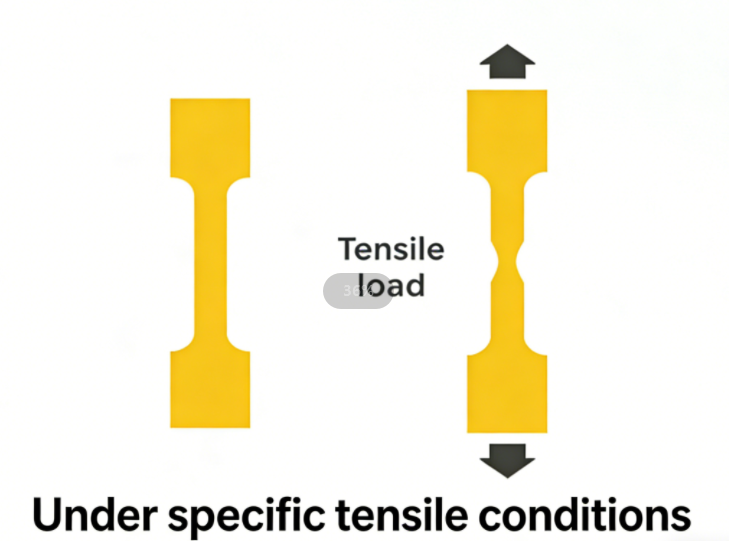
The tensile test is a basic method for evaluating the mechanical properties of polymers, aiming to determine the deformation and fracture characteristics of materials under continuous tensile force. The test process is simple: fix a standard-sized polymer specimen on a tensile testing machine, slowly apply axial tension until the specimen breaks, and record the relationship between tensile force and deformation throughout the process.
-
Tensile Strength: The maximum stress required to stretch the specimen to yield or fracture. Specifically, the yield strength corresponds to the stress when the specimen undergoes "necking" (local thinning), the fracture strength corresponds to the stress at the moment of fracture, and the ultimate tensile strength is the maximum value of the two, defining the stress limit of the material.
-
Elongation at Break: The ratio of the elongation of the specimen after fracture to its initial length. A higher value indicates better ductility of the material, meaning it can withstand more stretching before fracture and is not prone to brittle fracture.
-
Young's Modulus: Characterizes the rigidity of the material (ability to resist uniaxial tensile deformation). A higher value means the material deforms less under tension, making it suitable for structural parts requiring rigidity.
(2) Charpy Impact Test: Evaluating Impact Toughness of Materials

The Charpy impact test is used to evaluate the ability of polymers to resist instantaneous impact, reflecting the toughness of the material. During the test, a pendulum of fixed mass is swung from a specific height to impact a clamped specimen, and the impact energy required to break the specimen is calculated through energy loss.
The core evaluation indicator is Charpy Impact Strength (Unit: kJ/m²), which is the impact energy required to break the specimen. A higher value indicates better toughness and impact resistance of the material; a lower value means the material is more brittle.
(3) Three-Point Bending Test: Measuring Flexural Capacity and Rigidity of Materials
The three-point bending test is used to evaluate the ability of polymers to resist static bending deformation (simulating stress scenarios such as beams and supports). Both ends of the specimen are supported and fixed, and pressure is slowly applied at the midpoint until yield or fracture, while recording load and deflection data synchronously.
Two core indicators can be obtained after the test, reflecting the flexural performance of the material:
-
Flexural Strength: The maximum stress at the moment of yield or fracture when the material is bent, determining the load-bearing limit of the material as a bending component.
-
Flexural Modulus: Similar to Young's modulus, it reflects the rigidity of the material when bent. A higher value means the material has stronger resistance to bending deformation and better structural stability.
II. Key Thermal Performance Testing: Evaluating Thermal Stability of Materials
In addition to mechanical strength, thermal performance is crucial for components used in high-temperature environments (such as automotive and industrial parts). The following three tests can accurately measure the performance of materials under temperature changes:
(1) Heat Distortion Temperature (HDT)

Heat Distortion Temperature (HDT) characterizes the short-term heat resistance of materials under load. During the test, a fixed load is applied to the specimen, and the temperature is raised at a rate of 2℃ per minute. The temperature when the deformation of the specimen reaches 10mm (contacting the sensor) is the heat distortion temperature.
A higher heat distortion temperature means the material has better heat resistance under load and can maintain stable performance in a higher temperature environment.
(2) Vicat Softening Temperature (VST)
Vicat Softening Temperature (VST) is used to evaluate the softening characteristics of materials after being heated. Under standard pressure, a probe is pressed on the surface of the specimen, and the temperature when the probe penetrates 1mm into the surface of the specimen during heating is the Vicat softening temperature.
Compared with heat distortion temperature, Vicat softening temperature focuses more on evaluating the softening characteristics of materials under no significant load, ensuring the safety of materials used in high-temperature environments.
(3) Melt Flow Rate (MFR)
Melt Flow Rate (MFR) reflects the melt fluidity (viscosity) of polymers under specific temperature and pressure, directly affecting processing performance (such as 3D printing extrusion and injection molding filling). During the test, the melt is extruded from a nozzle under fixed conditions, and the weight of the extrudate within a set time is weighed.
A higher melt flow rate means the material has lower viscosity, better fluidity and easier processing; a lower value requires higher temperature or pressure for molding.
III. Core Significance of Testing
These six core tests form a complete polymer performance evaluation system (mechanical strength + thermal stability). They can provide accurate data for 3D printing material selection, product design and quality control, helping clarify material performance boundaries, avoid risks (such as insufficient strength and thermal failure), and finally select polymer materials that meet the requirements.